
The Possibility and Need for a Linear Jyutcitzi Cantonese Orthography

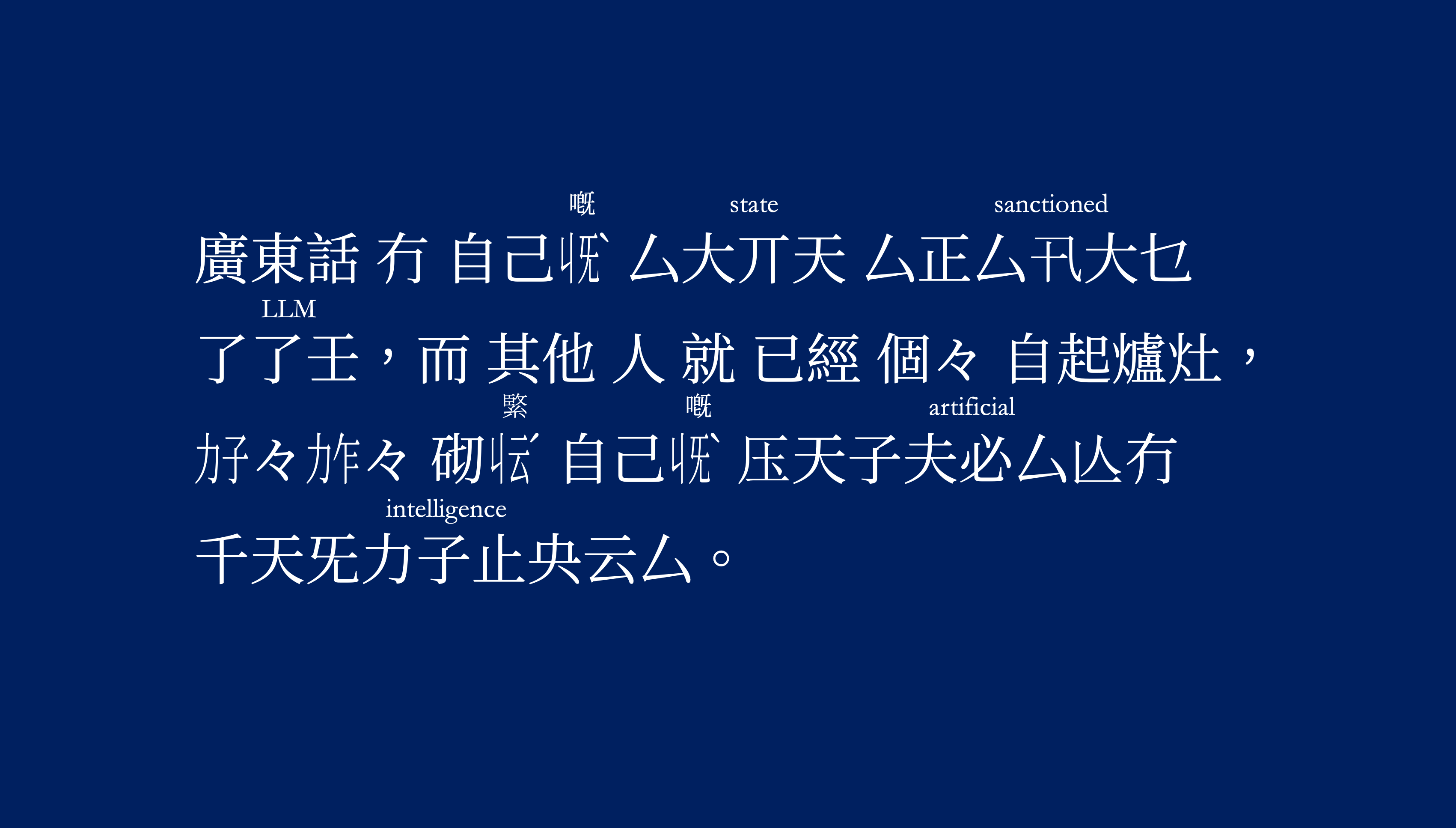
Jyutcitzi is like Hangul in the sense that the canonical jyutcitzi orthography organizes letters into syllables and compose them into glyphs. But once we depart the world of canonical and traditional Cantonese phonology and enter the world of loanwords, we find the canonical spacial rules for jyutcitzi quickly running out of room, both literally on paper and in logic. Suppose we have all suddenly decided to become Hegelians and would like to write an awful lot about the Cantonese Geist, in Cantonese, in jyutcitzi. How should we stack the syllables 丩兮厶天?I suppose like this? ⿲丩兮⿱厶天?
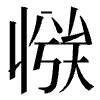
Ok that might work - and it looks fine - but one can’t help but wonder if we might still be able to operate if we for some unknown reason suddenly importing a lot of Polish words with their ungodly and alien compound consonants? Or rather, we don’t really need to go that far, just consider this sentence - which could have plausibly been uttered by some Hongkonger fund manager in Admiralty: “我地入咗幾多shares啊?” 厶亾旡乍厶?Well, semantically, if “shares” could be written with sinoglyphs, we would probably write it with only one sinoglyph, and drop the “s” in the same way that in ancient Old Chinese, 中國 probably meant 中國s but the plural marker was subsumed into the sinoglyphs and dropped. Given that intuition, we would have very much preferred to smudge all of “厶亾旡乍厶” into one jyutcitzi glyph. But that is in serious violation of the rule that each jyutcitzi glyph can have only one vowel - that’s the basis of an alphasyllabery writing system. So shares must be written as “⿰⿱厶亾旡⿰乍厶.
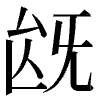
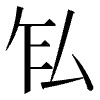
That’s fine - a departure of our ingrained Chinese literati intuition - but perhaps no more serious or deviant than multisyllabic Chinese words 連綿詞s like 葡萄、琵琶、駱駝、蝴蝶.
But what about really really multisyllabic words? Say “Artificial intelligence”. Does it really make sense to truncate into syllables? Isn’t it very tiresome and computationally inefficient? Oh sure, perhaps the day will come where we introduce rigid spellings so that we don’t “compute” the spelling in our heads but we simply extract the cache - or however it is that users of deeper orthographies “remember” their spellings… and of course, you can make the argument that if the koreans could do it why can’t we… - but before we reach that age, don’t we have to deal with how to truncate this monstrosity?乍天子夫必厶亾冇 千天旡力子止央云厶, like this?
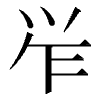
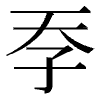

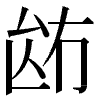
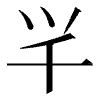
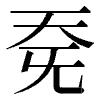
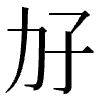

Well, the great thing about that is then we can treat them all as a multisyllabic lin-min-ci, and add semanophores next to them so
But that feature will probably only be used in certain settings - poetry, literature, philosophy, perhaps even law and government, and that’s very cool - probably will enslave the minds and all shall love jyutcitzi and despair as we finally successfully cultivate our own batch of Cantonese Koreaboos - but surely to the vast majority use cases, the simple linear string of jyutcitzi letters, coupled with spaces - 乍天子夫必厶亾冇 千天旡力子止央云厶 - is superior?
The question emerges before us. Is there a good reason for Jyutcitzi to incorporate a linear subsystem? We definitely want to keep the syllable composition rules, because that enables the composition with semanophores - and that opens up an entire universe of art and logic and philosophy that Cantonese can completely monopolise as its intellectual contribution to humanity - but surely we can do with a linear, uncomposed subsystem of jyutcitzi letters?
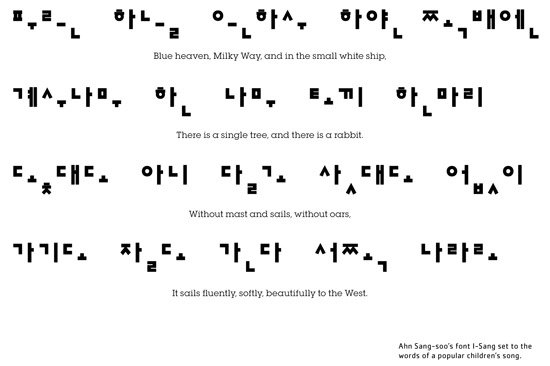
This is the linear Hangul. The letters are composed linearly and not syllabically.

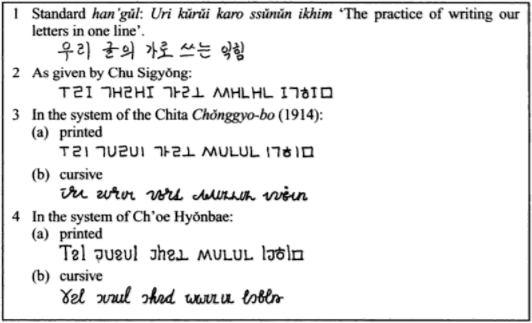
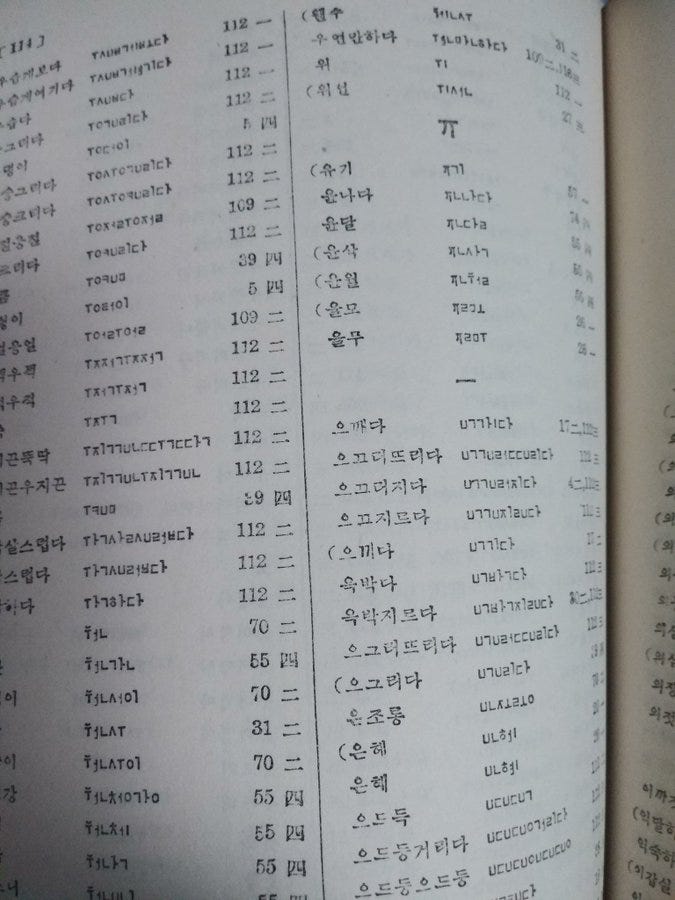
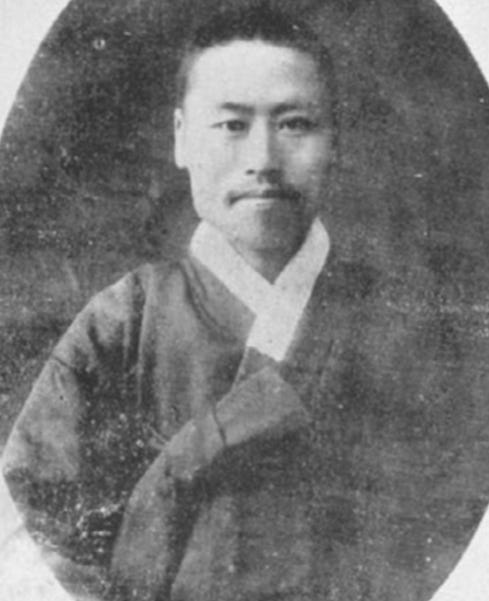
This idea was advocated by Ju Si-gyeong (주시경 / 周時經), an early Hangul reformer, but it was not adopted. Modern Korean retained syllable blocks rather than full linear writing.
Jyutcitzi, like Hangul, is syllable-composed. It is not freely linear like Japanese kana or most alphabetic systems. That creates friction when handling:
structurally complex loanwords
non-CV foreign phonologies
long technical terminology
A linear subsystem would:
• allow more faithful import of foreign phonology
• reduce glyph explosion in technical vocabulary
• simplify computational processing
• provide a third subsystem alongside honzi and composed jyutcitzi
• optionally function like katakana — marking loans or 實詞
• reduce 下字 proliferation by decomposing into consonant + vowel
• reflect how first-time users already instinctively use the system more alphabetically
It would be especially useful when composed forms:
• become visually overloaded
• create unclear semanophore pairing
• feel forced or unintuitive
Introducing word segmentation (spaces) would further improve recognition and lexicalization.
Let’s take a look at how things compare.
manifold:|文円乃子夫冇大
representational :|禾力旡并禾乍厶円天丌厶卂乃冇
agreement:|乍古子文云天
state:|厶大丌天
federal:|夫旡大居禾冇
constitution:|臼干厶天子天么厶卂乃冇
chemical:|臼壬文夕臼冇
physical:|夫子厶夕臼冇
artificial intelligence :|压天子夫必厶亾冇千天旡力子止央云厶
Let’s take a look at some sentences then
例句: keys:
loans to linear jyutcitzi: LTLJ
loans in composed jyutcitzi: LICJ
spacing introduced: S
jyutcitzi for functional words: JFFW
廣東話冇自己嘅state-sanctioned LLM,而其他人就已經個個自起爐灶,哩哩喇喇砌緊自己嘅 artificial intelligence.(contemporary Cantonese orthography)
廣東話冇自己嘅,而其他人就已經個個自起爐灶,哩哩喇喇砌緊自己嘅。 (LICJ)
廣東話 冇 自己嘅 ,而 其他 人 就 已經 個個 自起爐灶,哩哩喇喇 砌緊 自己嘅 。(LICJ, S)
廣東話冇自己,其他人已經個々自起爐灶,々々砌自己 。 (LICJ, JFFW)
廣東話 冇 自己 , 其他 人 已經 個々 自起爐灶,々々 砌 自己 。 (LICJ, JFFW, S)
廣東話冇自己嘅厶大丌天厶正厶卂大了了壬,而其他人就已經個個自起爐灶,哩哩喇喇砌緊自己嘅 压天子夫必厶亾冇千天旡力子止央云厶。 (LTLJ)
廣東話 冇 自己嘅 厶大丌天 厶正厶卂大 了了壬,而 其他 人 就 已經 個個 自起爐灶,哩哩喇喇 砌緊 自己嘅 压天子夫必厶亾冇 千天旡力子止央云厶。(LTLJ, S)
廣東話冇自己厶大丌天厶正厶卂大了了壬,而其他人就已經個々自起爐灶,々々砌自己 压天子夫必厶亾冇千天旡力子止央云厶。 (LITJ, JFFW)
廣東話 冇 自己 厶大丌天 厶正厶卂大 了了壬,而 其他 人 就 已經 個々 自起爐灶,々々 砌 自己 压天子夫必厶亾冇 千天旡力子止央云厶。(LTLJ, S, JFFW)